
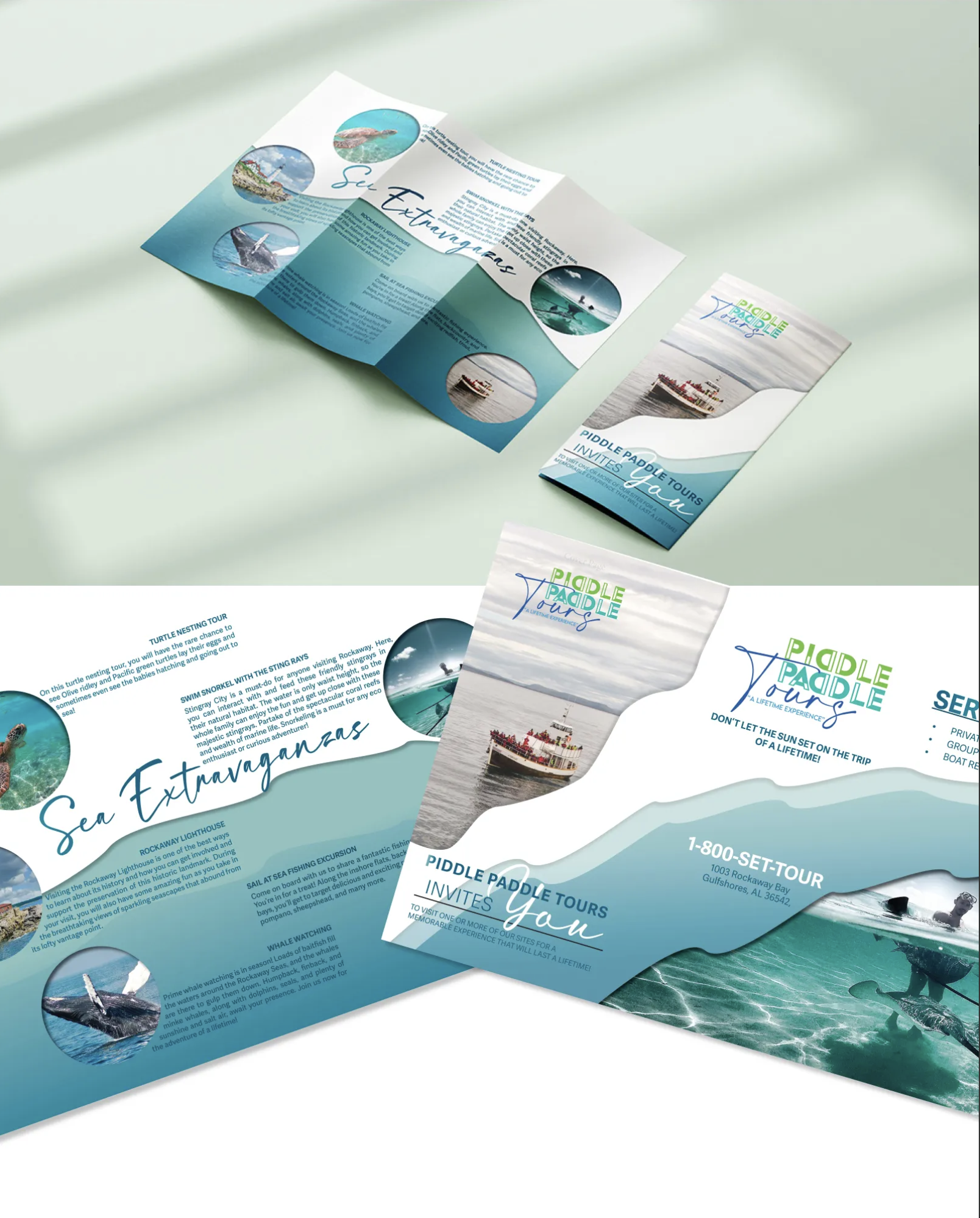
I used InDesign to lay out the brochure, leaning on Photoshop for prepping and adjusting images. Knowing the difference between reader and printer spreads helped me plan the content so it flowed well for the user while also aligning properly for print. I worked with a modular grid to keep structure consistent and used contrast, color, and image placement to guide the viewer’s eye. Each section was spaced and aligned to bring balance and clarity. The playful palette and photo choices kept the design light and engaging without straying from the brand. I mapped out the panels beforehand and tested a few layout options before landing on one that felt clean and intuitive. All assets were either provided or ethically sourced.
Throughout the process, I stuck to the project brief, using the provided content and following the trifold format, while still refining the typography and spacing for better visual clarity. I gave focused critique on spacing and layout flow and used peer feedback to rework some content placement and strengthen the hierarchy. Service information became easier to spot thanks to those small but meaningful tweaks. Every detail was checked, from color consistency to alignment, and final files were exported with crop marks, bleed, and proper resolution to make sure the print setup would be spot on.